Pay Per Click Management

How to Generate ROI Through Google Ads for Your Driveways Business

Driveways are a competitive local market — but Google Ads done properly can be the most reliable source of high-intent leads your business has. The key is setting up your campaigns with precision: the right structure, the right pages, and the right traffic.   In this guide, we’ll walk through the strategies we use to […]

How to Generate ROI Through Google Ads for Your Driveways Business

Written By

George Gerges

Posted On

April 3, 2025

Driveways are a competitive local market — but Google Ads done properly can be the most reliable source of high-intent leads your business has. The key is setting up your campaigns with precision: the right structure, the right pages, and the right traffic.


In this guide, we'll walk through the strategies we use to maximise ROI for driveways businesses through Google Ads — specifically focusing on campaign structure, landing page quality, and traffic relevance.

Step 01

Focus on relevance in your Google Ads campaigns

The foundation of every high-performing campaign

The most important principle in Google Ads is relevance. Your ads need to speak directly to what the searcher is looking for. This means tightly themed ad groups, ads that match the search query, and landing pages that deliver on the ad's promise.

People searching for driveway services are often in a high-intent buying mode — they want a quote, not general information. Therefore, your Google Ads campaigns must be highly specific, linking to a tightly themed landing page to convert that intent into a lead.

Why relevance matters
Higher relevance = higher Quality Score = lower CPC. Google rewards advertisers who show the right ad to the right person. When everything aligns — keyword, ad, landing page — your cost per lead drops significantly.
Intent-matched keywords Tight ad groups Higher Quality Score Lower CPC
Step 02

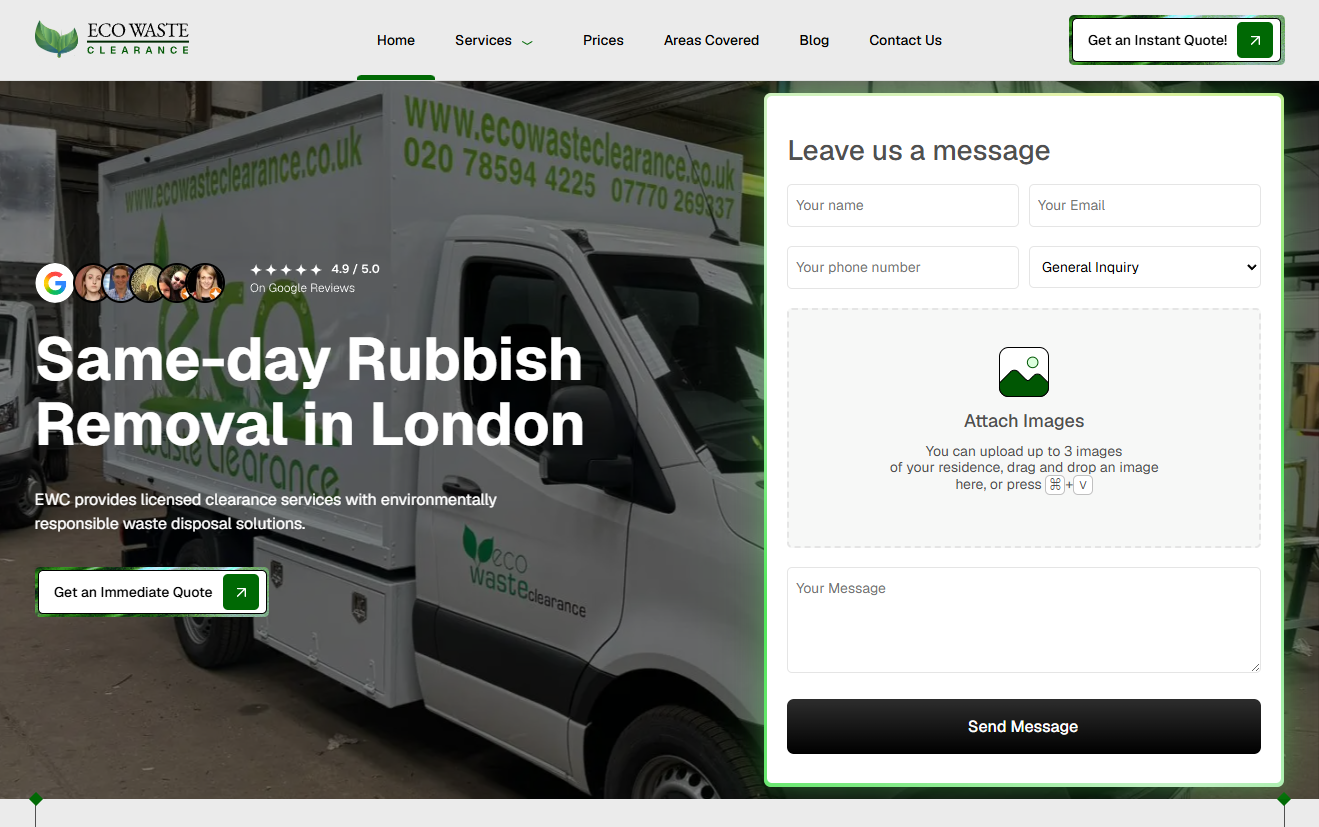
Create bespoke landing pages for each service and location

One page per combination — never send traffic to your homepage

A landing page is a dedicated page built to convert a specific type of visitor. Sending all your Google Ads traffic to your homepage is one of the most common — and costly — mistakes driveways businesses make.

Instead, create a separate landing page for every service–location combination you target. Each page should be laser-focused on a single offer, with all the content designed around one outcome: getting the visitor to request a quote.
The Google Ads benefit

When your landing page matches the ad and the keyword, Google's algorithm recognises the relevance and rewards you with a better Quality Score — meaning you pay less per click and rank higher than competitors bidding more.

Also exclude irrelevant searches using negative keywords. This stops wasted clicks from people who aren't interested.

Step 03

Optimise your landing pages for conversions

Traffic is worthless without a page that converts visitors into leads

Your landing page does the heavy lifting once someone clicks your ad. Every element of the page needs to earn its place. Here's what high-converting driveways landing pages consistently include:

Responsiveness across all devices
The majority of driveway searches happen on mobile devices. If your landing page doesn't load quickly and display cleanly on a phone, you're losing the majority of your potential leads before they even read your offer. Test on multiple devices and ensure buttons are large enough to tap easily.

A

Responsiveness across all devices

The majority of driveway searches happen on mobile devices. If your landing page doesn't load quickly and display cleanly on a phone, you're losing the majority of your potential leads before they even read your offer. Test on multiple devices and ensure buttons are large enough to tap easily.
B

Sticky call-to-action (CTA)

A sticky CTA remains visible as the visitor scrolls through the page. Whether it's a phone number in the header bar or a persistent "Get a Free Quote" button, it ensures the conversion action is always just one tap away — regardless of how far down the page someone reads.
C

Irresistible offer above the fold

The very first thing a visitor sees when they land on your page must compel them to stay and act. Use a time-limited, high-value offer to create urgency. For example: "Limited-time Spring Offer: 25% Off for All May & June Projects — Get a Free Quote Now." This immediately communicates value and drives action.
D

Clear and readable content

Keep your copy concise, scannable, and easy to digest. Use short paragraphs, clear subheadings, and bullet points to help visitors quickly understand what you offer and why you're the right choice. Avoid jargon — speak plainly and focus on what the customer gets.
E

Customer reviews and social proof

Include testimonials from real customers, ideally from the same local area you're targeting. Star ratings, Google review counts, before-and-after photos, and case study snippets all build credibility fast. People trust other customers more than they trust businesses — show them the evidence.
F

High-quality images and videos

Use professional photography of completed driveways — preferably local projects. High-quality visuals communicate quality and expertise instantly. Short video walkthroughs of completed installations can dramatically increase time on page and help visitors visualise the end result for their own property.
G

Mention the keyword and location

Your page headline, body copy, and CTA should all reference the specific service and location. This confirms to both Google and the visitor that they've landed in exactly the right place. For example: "Expert Resin Driveways in Manchester — Get Your Free Quote Today." Relevance at every touchpoint is what drives conversions.
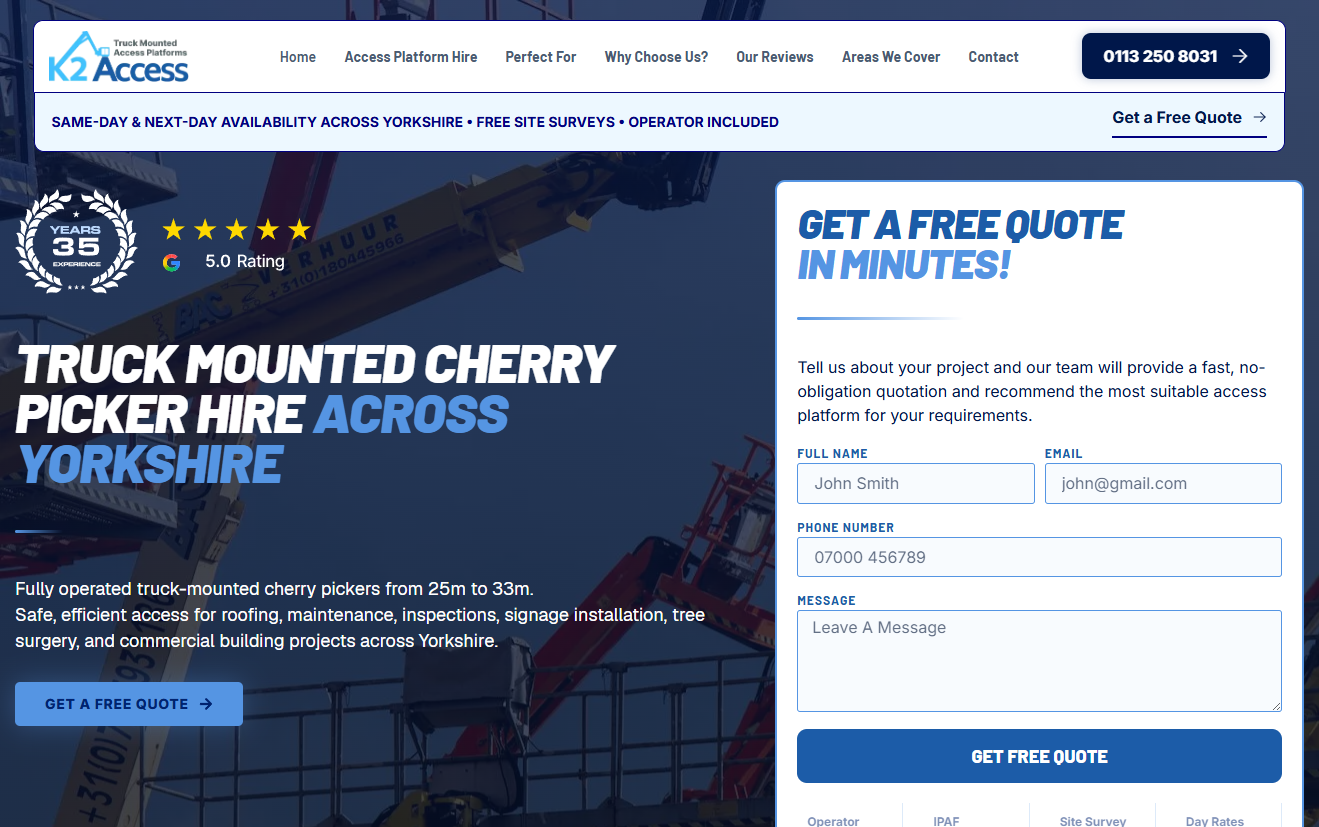
Before vs after

Instead of "We sell coffee" → try "Get fresh, local coffee delivered to your door!" Then add urgency: "Order today for 20% off!"

Step 04

Run separate campaigns for each location

Granular structure means full control over budget and performance

Grouping all your locations into a single campaign makes it impossible to understand what's working. Each location you serve should have its own campaign so you can monitor performance, control budgets, and optimise independently.

This also allows you to allocate more budget to the locations generating the lowest cost per lead, and pause or reduce spend where results are weaker — decisions you simply can't make with a lumped-together structure.
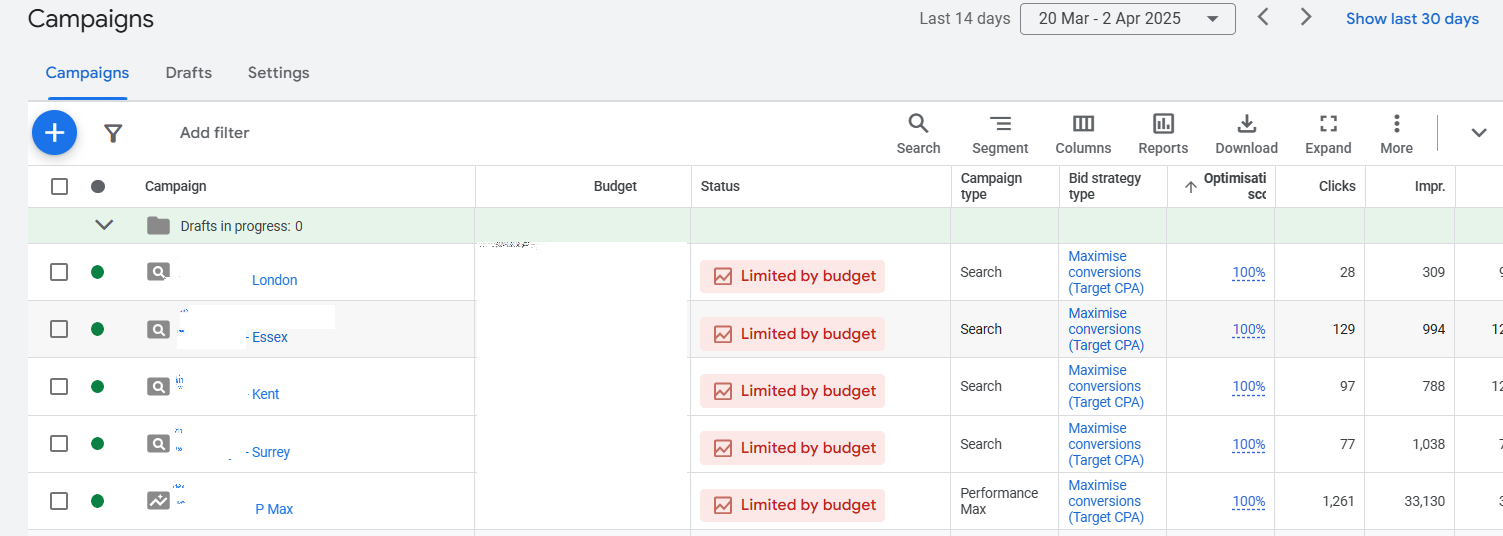
Campaign Structure

Campaign: Resin Driveways – Manchester → Ad Group: Resin Bound Driveways Manchester → Landing page: /resin-driveways-manchester. Replicate this for every service and city you cover.

Step 05

Drive only relevant traffic

Unqualified clicks drain budget without producing leads

Not all traffic is equal. Someone searching "DIY driveway ideas" has zero intent to hire — but without proper keyword management, your ads can appear for that query and you'll pay for the click. Precise keyword match types and a robust negative keyword list are non-negotiable.

Regularly audit your Search Terms report inside Google Ads. Any query that triggered your ad but isn't commercially relevant should be added as a negative keyword immediately. This is an ongoing task, not a one-time setup.

Common negative keywords for driveways

DIY · free · cheap · ideas · images · how to · pictures · average cost · Reddit · YouTube — these attract browsers, not buyers. Block them from day one.

Exact match keywords Phrase match Negative keyword lists Search terms audit
Step 06

Monitor and optimise your campaigns

Google Ads requires ongoing attention to stay profitable

Launching a campaign is just the beginning. The businesses that get the best ROI from Google Ads are the ones that review performance regularly and make data-driven adjustments. Aim for at least a weekly review.

Key metrics to monitor: CTR (click-through rate), CPC (cost per click), conversion rate, and cost per lead. If CTR is low, the ad copy needs work. If conversion rate is low, the landing page needs attention. If CPC is high, Quality Score improvements are the priority.

Test continuously — new ad headlines, different CTA wording, updated offers on landing pages. Small, incremental improvements compound into significantly lower costs and higher returns over time.

Weekly performance reviews A/B test ad copy Cost per lead tracking Landing page testing
Step 07

Track conversions properly

Are you actually measuring results?

Use Google's tools to see what's working. Set up conversion tracking to measure leads, sales, or sign-ups.

Why it matters
Without tracking, you're guessing. Data helps you make smarter decisions and stop spending on what isn't working.
Step 08

Try retargeting

Bring back people who didn't convert first time

Not everyone buys on the first visit. Retargeting shows ads to people who've already clicked — a great way to remind them about your offer.

Urgency example

"Don't miss 10% off — offer ends today!" — Creating a sense of urgency in retargeting ads can bring hesitant visitors back to convert.

Maximising your ROI with Google Ads for driveways businesses

Google Ads is one of the most powerful tools available to driveways businesses — but only when built and managed with precision. A generic account structure, a homepage as your landing page, and no negative keyword list will burn through budget with little to show for it.

The businesses that win are those that treat Google Ads as a system: relevant campaigns feeding relevant landing pages, driving only relevant traffic, tracked properly and optimised continuously. When all of those elements are in place, Google Ads becomes a predictable, scalable lead generation engine.

Ready to maximise ROI from your driveways business?

Advertronix specialises in Google Ads for trades businesses. We build the campaigns, landing pages, and tracking infrastructure that turn clicks into customers.
Speak to an expert