

Focus on relevance in your Google Ads campaigns
The foundation of every high-performing campaign
The most important principle in Google Ads is relevance. Your ads need to speak directly to what the searcher is looking for. This means tightly themed ad groups, ads that match the search query, and landing pages that deliver on the ad's promise.
People searching for driveway services are often in a high-intent buying mode — they want a quote, not general information. Therefore, your Google Ads campaigns must be highly specific, linking to a tightly themed landing page to convert that intent into a lead.

Create bespoke landing pages for each service and location
One page per combination — never send traffic to your homepage
A landing page is a dedicated page built to convert a specific type of visitor. Sending all your Google Ads traffic to your homepage is one of the most common — and costly — mistakes driveways businesses make.
Instead, create a separate landing page for every service–location combination you target. Each page should be laser-focused on a single offer, with all the content designed around one outcome: getting the visitor to request a quote.
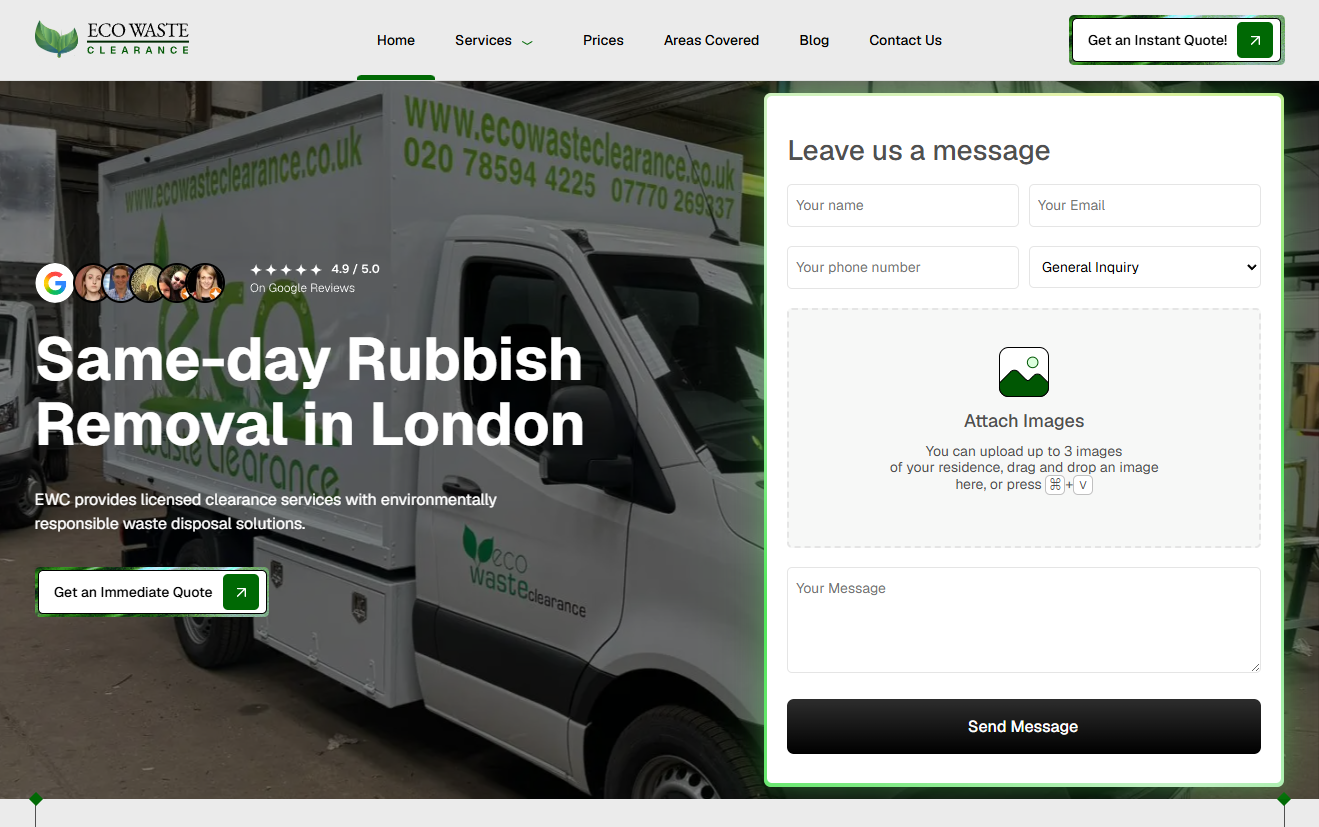
When your landing page matches the ad and the keyword, Google's algorithm recognises the relevance and rewards you with a better Quality Score — meaning you pay less per click and rank higher than competitors bidding more.
Also exclude irrelevant searches using negative keywords. This stops wasted clicks from people who aren't interested.
Optimise your landing pages for conversions
Traffic is worthless without a page that converts visitors into leads
Your landing page does the heavy lifting once someone clicks your ad. Every element of the page needs to earn its place. Here's what high-converting driveways landing pages consistently include:
Responsiveness across all devices
The majority of driveway searches happen on mobile devices. If your landing page doesn't load quickly and display cleanly on a phone, you're losing the majority of your potential leads before they even read your offer. Test on multiple devices and ensure buttons are large enough to tap easily.
Responsiveness across all devices
Sticky call-to-action (CTA)
Irresistible offer above the fold
Clear and readable content
Customer reviews and social proof
High-quality images and videos
Mention the keyword and location
Your page headline, body copy, and CTA should all reference the specific service and location. This confirms to both Google and the visitor that they've landed in exactly the right place. For example: "Expert Resin Driveways in Manchester — Get Your Free Quote Today." Relevance at every touchpoint is what drives conversions.
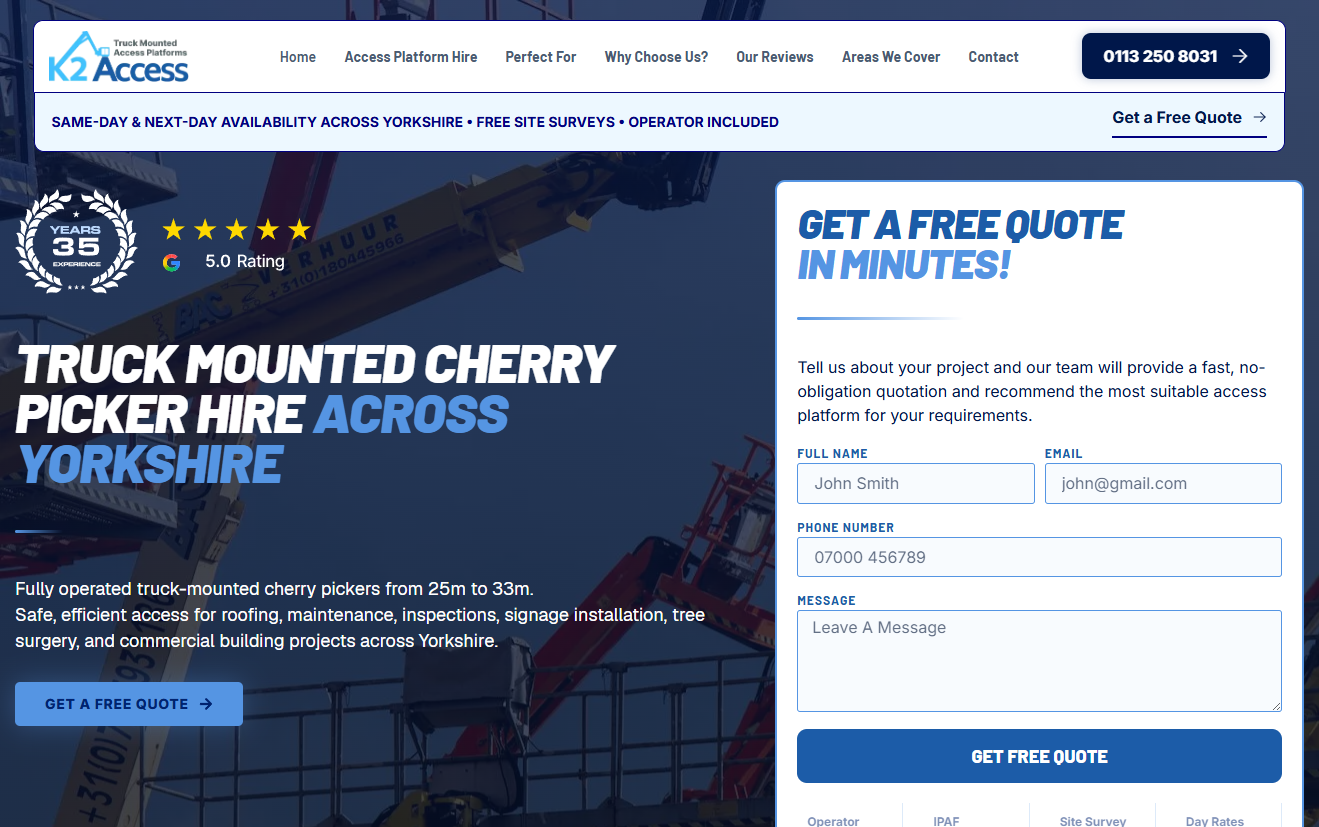
Instead of "We sell coffee" → try "Get fresh, local coffee delivered to your door!" Then add urgency: "Order today for 20% off!"
Run separate campaigns for each location
Granular structure means full control over budget and performance
Grouping all your locations into a single campaign makes it impossible to understand what's working. Each location you serve should have its own campaign so you can monitor performance, control budgets, and optimise independently.
This also allows you to allocate more budget to the locations generating the lowest cost per lead, and pause or reduce spend where results are weaker — decisions you simply can't make with a lumped-together structure.
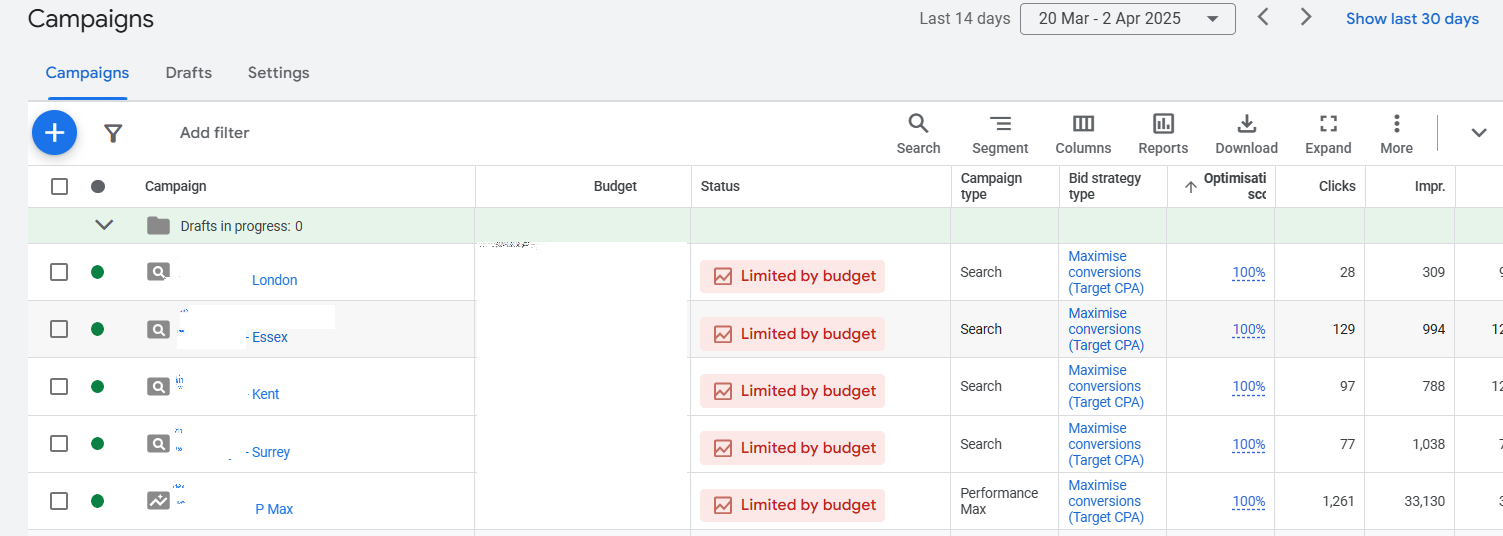
Campaign: Resin Driveways – Manchester → Ad Group: Resin Bound Driveways Manchester → Landing page: /resin-driveways-manchester. Replicate this for every service and city you cover.